Running a community sports club can easily turn into a juggling act of emails, spreadsheets, and schedules. In this article, I share how we used n8n to transform the day-to-day operations of our LGBTQ+ volleyball club (PAN Volleyball). It has helped us move from manual processes to smooth automations so that we can focus on more important things: keeping a safe and welcoming environment, and grow our LGBTQ+ volleyball community.

Finding the right solution
In early 2024 I was elected as a chairperson of PAN Volleyball. A small volleyball club, part of the Danish PAN Idraet sport association.
As soon as I joined, I noticed how the steering group was overloaded by repetitive and manual tasks. Between onboarding new players, managing waiting lists, collecting feedback, and checking hall availability, there was a lot of administrative work that can drain the joy from organizing activities. Almost all the players/members of the club don’t even notice these tasks happening behind the scenes. 🤔 What can I do about this?
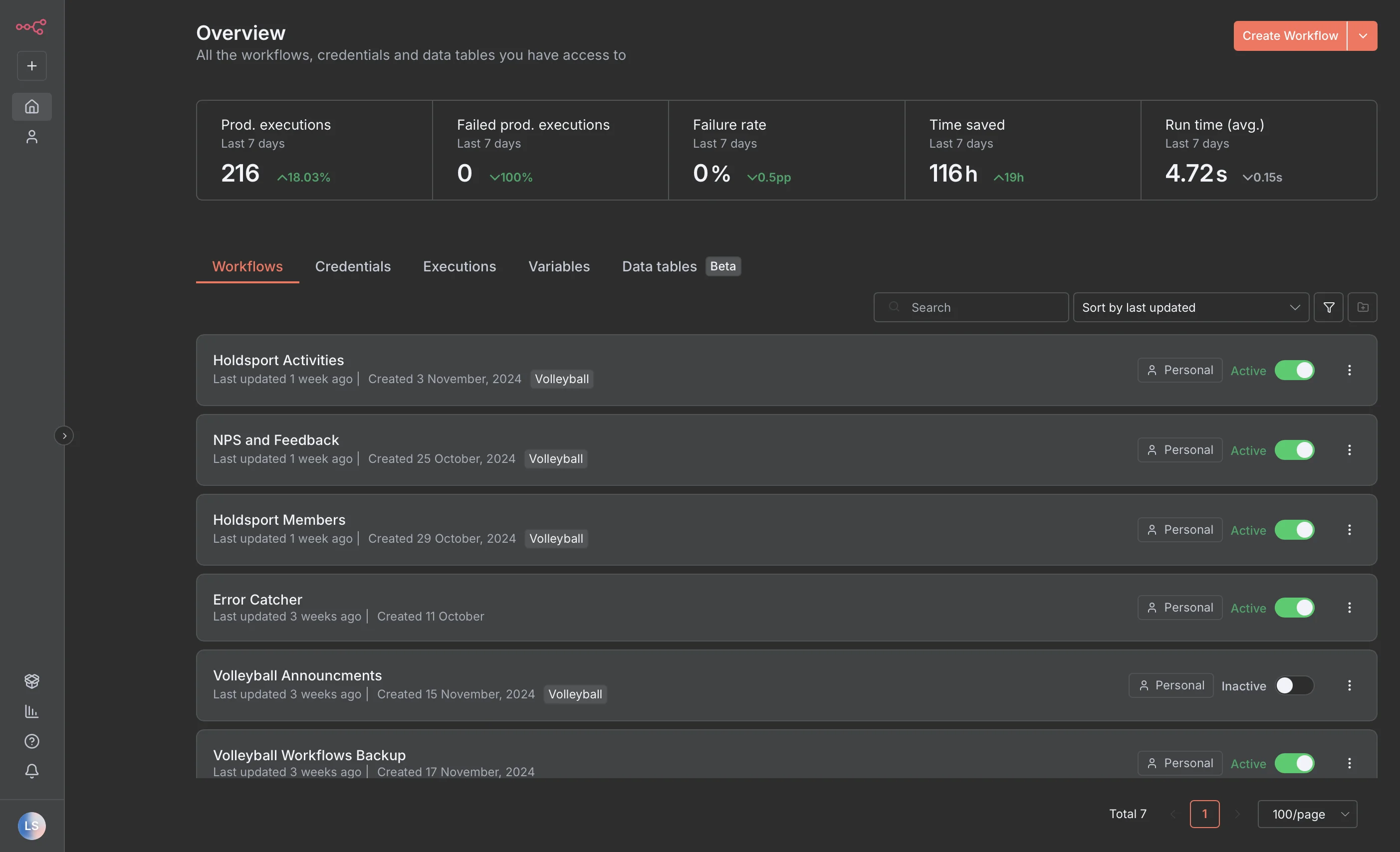
I decided to use N8N: I wanted a platform powerful enough to handle our workflows but friendly enough that other volunteers could understand it at a glance… did I mention that it is an open source project?
After speaking with people helping us managing the club, we decided to avoid
Cloud or SaaS solutions. On top of that, being an organization ran by
volunteers the budget is tight: I currently run n8n in my homelab on a NixOS
and Kubernetes cluster. This gives us better control of how our data is
handled. If needed we can move the workflows (as JSON files) somewhere
else, like a hosted instance or SaaS offering.

Of course, I didn’t work alone on this. Given my background in DevOps, platform engineering, and startups, I felt the need to focus on user experience. I sat down with some of the steering group members to identify pain points, and what could be automated and improved in what they’ve been doing.
Onboarding new players
After talking with the responsible for managing members in the steering group, together we decided which steps could be automated without losing the personal touch. With three to five new player sign-ups every week, managing a waiting list had become necessary but time-consuming.
Today, whenever someone signs up, a workflow automatically adds useful info to a shared spreadsheet, sends a welcome email with details about their first training, and follows up to confirm their interest.
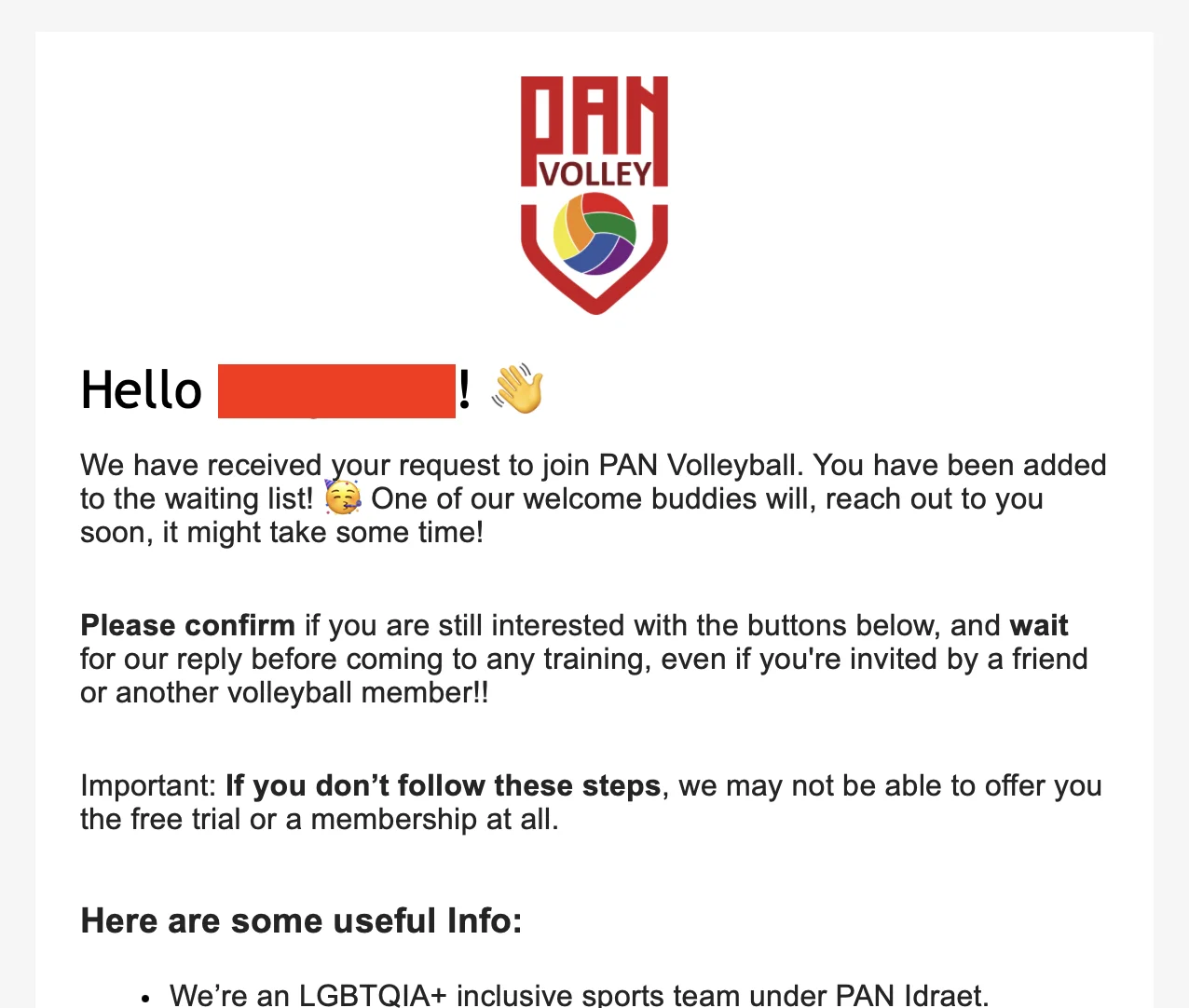
This confirmation step made a huge difference. As an LGBTQ+ club, some people decided not to continue once they realize the inclusive nature of the team. What if they could just click a link to say “sounds gay, I am in” instead of us sending follow up reminders? 😆
The automated email flow handles gracefully, saving our team time while keeping communication professional and kind. What used to take multiple volunteers hours a week now happens instantly… though we still need to welcome people in person 😉 and that can’t be automated!
Keeping people happy
Maintaining a healthy, happy club culture is just as important as managing signups. To stay connected with how members feel, I built an automated NPS (Net Promoter Score) system. After the first month, then every three months after joining, players receive a quick email asking for feedback and a score.
N8N collects these responses, calculates our NPS, and sends highlights privately to the leadership group. If a concern surfaces, we can address it immediately instead of waiting for the next meeting.
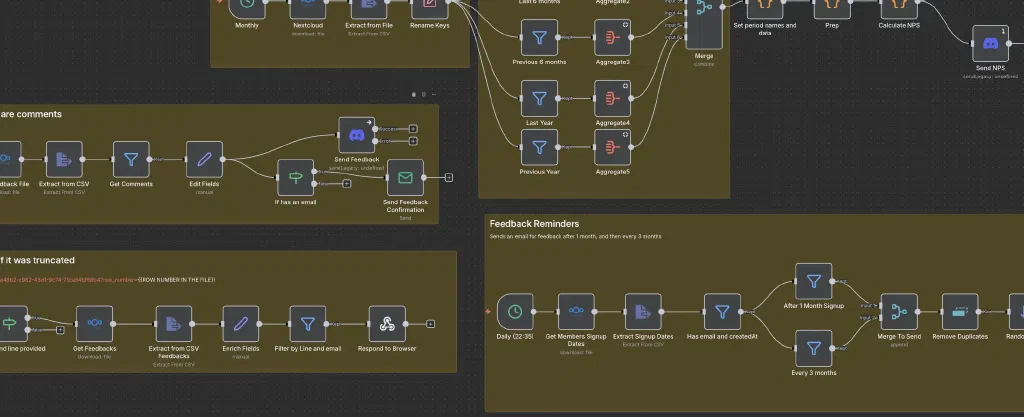
Every month, n8n sends to the steering group the NPS with numbers for the last 3, 6, and 12 months, comparing them with the previous periods. I am happy we implemented this from the very first day. As an LGBTQ+ club, we need to keep it a safe space. When we had issues with members in the club, this system gave us a quantitative measure to how things affected players. The players also found this tool useful to report concerns in a safe and protected way. We are humans after all, we make mistakes and have opinions but numbers are hard to debate.
Checking halls availability
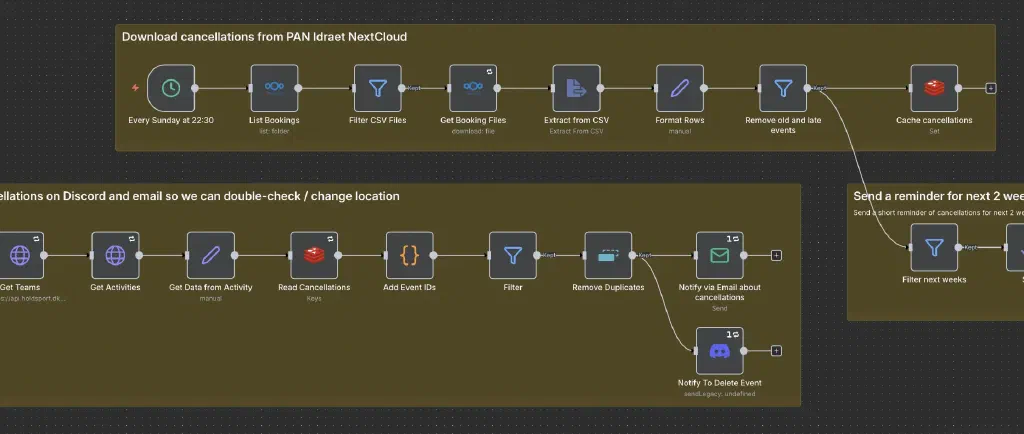
One of the club’s biggest logistical chores used to be monitoring whether our hall bookings were still available. Schedules change, events get canceled, and the halls/facilities don’t always notify us directly. 😩 Someone had to check multiple websites and manually update our calendar multiple times a week.
Now, n8n checks those same hall websites every week, compares the listings against our calendar, and alerts the person responsible in the steering group whenever we need to cancel a training. It’s a simple puppeteer cron job and a workflow that compares the data. It’s saved a huge amount of time and helped us avoid plenty of last-minute surprises.
Gathering data for informed decisions
Our club uses Holdsport as a provider to manage the sports. Thankfully they provide a public API (documented on GitHub), which n8n connects to automatically. The workflow regularly pulls data to calculate stats like retention and participation rates.
The results feed directly into CSV files that we use during our steering group meetings, or during the General Assembly with our members. These reports reveal trends like member count, or attendance, helping us make informed decisions on what works and what did not work. Instead of wasting time copying data from one spreadsheet to another, everything updates automatically behind the scenes.
A Year of Saving Time and Sanity
A year into using N8N, the impact has gone far beyond saving time. Automating repetitive work has allowed us to focus more on what actually matters: improving training sessions, planning events, and building a welcoming LGBTQ+ volleyball community. The workflows run quietly in the background, reducing stress and letting our volunteers do what they love instead of juggling admin duties.
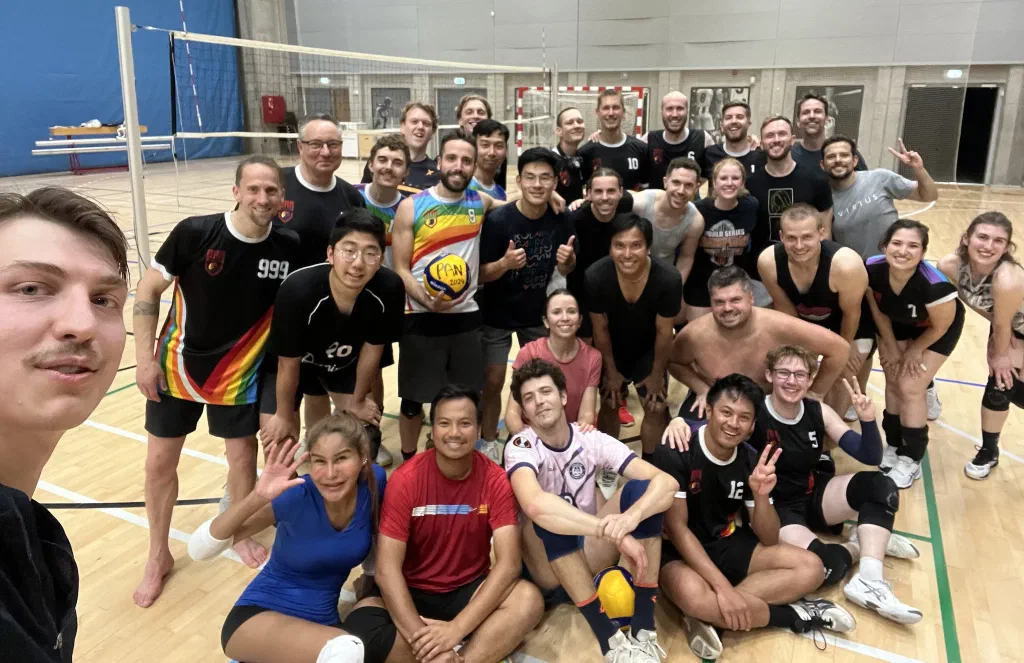
And the results speak for themselves. Since starting these automations, our club has grown from around 50 to nearly 100 members as people in the steering group had more time to focus on other things. This year we even managed to form 3 competitive teams to join in tournaments! 🎉 Though, we decided cap sign-ups due to limited hall space… a good problem to have! 😉
We are all volunteers and don’t earn anything from this, but it’s deeply rewarding to see technology bring real value to our community, it is not always about platform engineering. Creating these automations has been not only efficient but genuinely fun!